
Cleveland Warrant Checks
Cleveland posts no citywide warrant search box. For a city citation or a missed municipal date, the first stop is Cleveland Municipal Court. Use the citation, legal name, date of birth, violation date, and case number when available. Staff can explain the procedure. They cannot give legal advice or dispose of a citation.
- Read the citation and identify Cleveland Municipal Court or another named court.
- Use the Cleveland Court Case Information Request for a narrow own-record inquiry.
- Contact the Municipal Court clerk at 706-865-0058 about an appearance, FTA, or case procedure.
- For police-held material, use Cleveland Police’s records custodian; for county process, use the White County court or sheriff.
- If a warrant may be active, consult counsel before an in-person inquiry because custody may follow.
Cleveland Warrant Court Hub
The 2020 Census incorporated-place table counts 3,514 Cleveland residents. The city is also the White County seat. That puts city and county offices close together without merging who holds the records, as the official county geography page explains.
A Cleveland city citation belongs with the municipal clerk. A felony record belongs with White County Superior Court, and a warrant application may begin in Magistrate Court. Nearby addresses do not merge those jurisdictions. The White County Clerk divides Superior Criminal, Magistrate, Probate, civil, and juvenile work among its divisions. Probate covers misdemeanor traffic within its jurisdiction. Jail-risk traffic cases can appear in Superior Criminal. Read the citation or notice for its court name. That one step keeps a Cleveland request from being misdirected to a county division, and it stops an unrelated police report from standing in as current Cleveland court status.
Policing and Courts in Cleveland
Cleveland Municipal Court issues process in city cases. Cleveland Police serves and enforces it within its authority. The city court handles misdemeanor criminal cases, ordinances, and traffic matters. County arrest warrants may instead issue from White County Magistrate or Superior Court, with the White County Sheriff serving them.
Cleveland Municipal Court
Office: 85 South Main Street, Cleveland, GA 30528
706-865-0058
Best for municipal citations, court dates, dispositions, and FTA procedure.
Cleveland Police Department
342 Campbell Street, Cleveland, GA 30528
706-865-2111 non-emergency
Records custodian: cpdinfo@clevelandga.org; 706-348-7078.
Cleveland Warrant Court Locations
Cleveland court sessions sit at the White County Courthouse, 59 South Main Street. The administrative office is at City Hall, 85 South Main Street. Cleveland sessions run about once monthly. They start at 5:30 p.m. on scheduled dates. Check the official court page for the real date before travel. Filing or payment goes to City Hall. Courthouse security rules apply at the session location. The hearing room is not the records counter. Verify the date and destination before leaving, because the two South Main Street addresses in Cleveland serve different functions.
Warrants in Cleveland: The Main Types
Sort Cleveland warrant records by how the process arose and which judge controls it. A citation is not itself a warrant. An FTA consequence does not prove every listed consequence occurred.
| Type | How it arises | Issuing authority |
|---|---|---|
| Bench warrant | Failure to pay, appear, or comply in a city case | Cleveland Municipal Court |
| Ordinance warrant | Unresolved city-code matter within jurisdiction | Municipal judge |
| Arrest warrant | Probable-cause process after investigation or application | Authorized magistrate or other court |
| Search warrant | Judicial authorization to search for evidence | Authorized judge; not a person roster |
Cleveland Warrant Continuance Deadline
A written continuance request must reach Cleveland Municipal Court by noon the business day before court. The city allows no telephone continuance. Staff may reset a case once. Further changes happen in open court, and day-of changes require the judge or solicitor.
Deadline: Calling is not a substitute for the required written Cleveland continuance request, and submitting a request does not itself confirm approval.
Keep proof of delivery. Then check with the clerk. If the deadline has passed, ask whether the court entered a failure to appear or a bench warrant on the Cleveland case. Ask what appearance, bond, or judicial step is required. A later payment does not automatically recall a warrant. A written request should give the Cleveland case or citation number, the scheduled setting, and reliable contact information. Keep a copy and the delivery confirmation. Until the clerk confirms a new date, the original Cleveland setting is the safe one to follow. A continuance request and a payment answer different questions. A judge may want a new appearance, a bond, or a written motion before acting. The municipal clerk can explain the Cleveland court's process. Only the court can change its own order. That distinction keeps a missed Cleveland court date pointed at lawful resolution instead of a guess that an online transaction erased the warrant entry.
Cleveland Warrant Records: What They Show
The city publishes no live Cleveland warrant list of defendants. What a record contains comes from official city forms and court materials.
| Case or citation number | An exact identifier such as Cleveland citation number, preferable to a name-only match. |
|---|---|
| Defendant identifiers | Legal name, date of birth, and violation date used to locate the correct case. |
| Matter | Traffic, misdemeanor, ordinance, or other municipal classification. |
| Court action | Appearance setting, disposition, FTA entry, or warrant-related notation if releasable. |
| Status | Must be confirmed with the court; paid, disposed, recalled, and active are not synonyms. |
Some details stay private. Cleveland may withhold or redact personal addresses, license numbers, juvenile information, and protected investigative details.
Request Cleveland Warrant Case Information
Cleveland's official Court Case Information Request form gathers the practical details the clerk needs: your contact information, the type of record you want, the defendant's legal name, date of birth, violation date, and citation or case number. You also certify whether you are defendant or victim. One caution. The form is a request route, not a promise that every Cleveland record sits online. For other city records, the city open-records page splits the duties three ways. Court dockets go to the Court Clerk. Police reports go to the police custodian. Paper copies generally run $0.10 per page, while electronic media is billed at actual cost. Give a tight date range and a clear identifier for anything held in Cleveland.
Cleveland Warrants and White County
Cleveland's municipal process never replaces the county system. White County Magistrate Court takes warrant applications and preliminary criminal matters. White County Superior Court holds felony jurisdiction. The Sheriff's Civil and Warrants Division serves court-issued arrest warrants regardless of jurisdiction, and Georgia keeps no central public warrant database.
Warrant flow: Cleveland Municipal Court or Police › White County Sheriff or issuing county court › no centralized Georgia public search
Not sure a matter is even municipal? Use White County warrant records and the White County warrant check to find the right office for a Cleveland matter. The Sheriff gives out no warrant information by phone, so a precise written request or a counseled in-person visit is the county fallback.
Cleveland Warrant Payment Is a Legal Choice
Cleveland lets you pay an eligible citation online, by phone at 1-800-262-0128, at the Municipal Court office, or by mail. Deadlines differ by method. Online and telephone payments must be in by 5 p.m. the day before court. The office takes payment until 4 p.m. on the court date itself. Mail has its own rules. It requires a money order plus a signed, notarized Waiver of Rights, never cash or a personal check. Read the fine print before you click. Cleveland warns that an online or phone payment operates as an electronic signature, a guilty plea, and a waiver of rights. A card convenience fee applies too. Nor can staff or officers decide the citation for you. Call before you assume anything is resolved. Paying is a legal choice, not a neutral one-click warrant recall. Ask Cleveland Municipal Court whether a warrant exists and what judicial action is needed; Cleveland's official municipal page documents the FTA, payment, and clerk route.
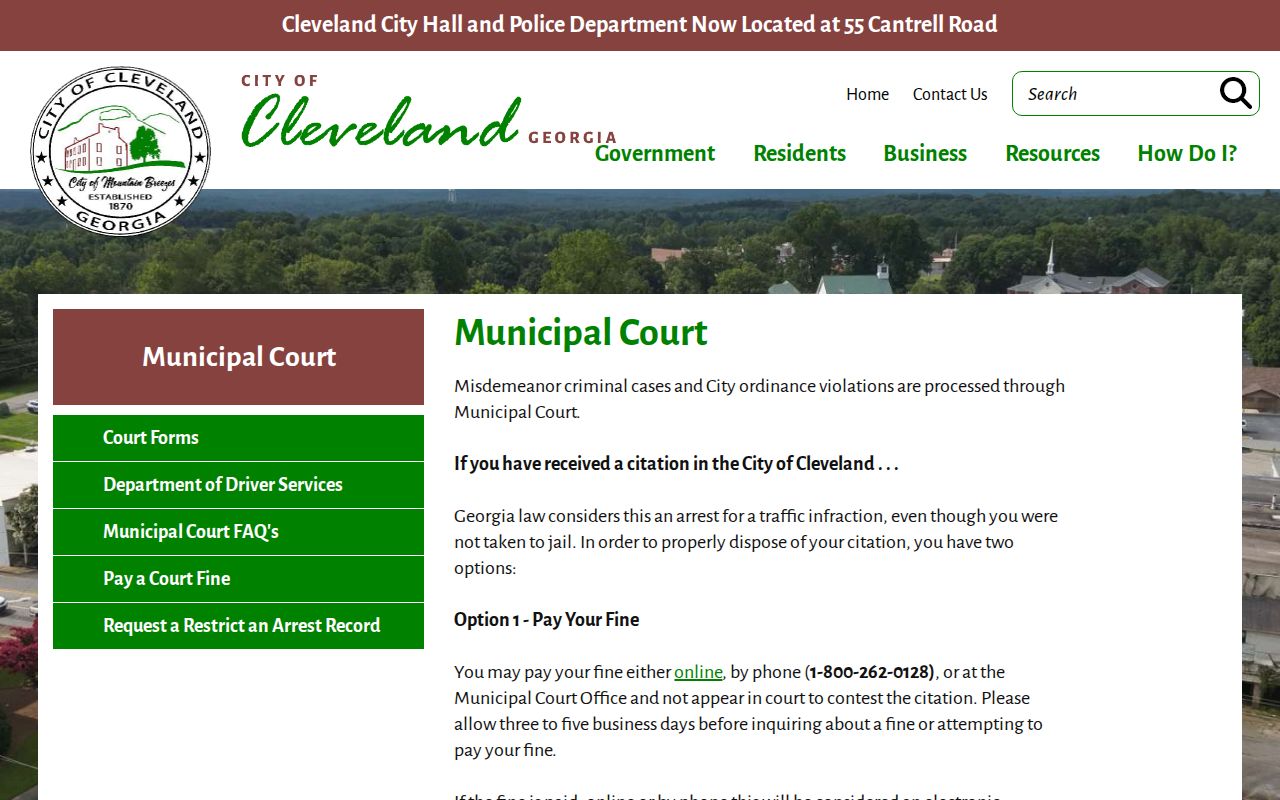
The screenshot supports the procedure; it does not show or identify any defendant.
Cleveland Warrant Police Records Route
Cleveland Police posts no public warrant portal. For police-held records, email cpdinfo@clevelandga.org or call the administrative records contact at 706-348-7078. The non-emergency number is 706-865-2111. Save 911 for emergencies. Name the incident or case, the date range, and the exact record you want rather than demanding a freshly compiled warrant list; the department's official page sets out this city-police fallback for Cleveland.
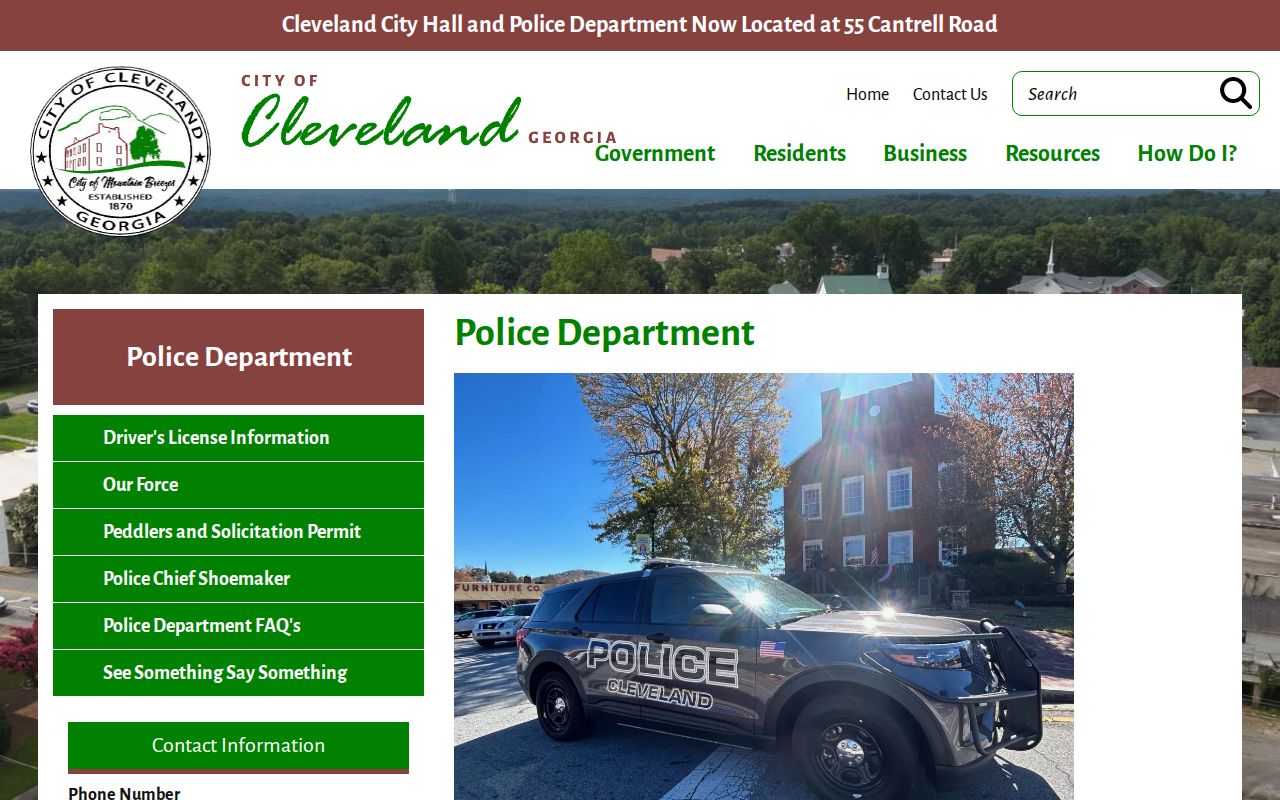
Police records and court records sit with different custodians. A police answer says nothing about whether Cleveland Municipal Court has recalled a bench warrant.
Accessing Cleveland Warrant Records
The Georgia Open Records Act, O.C.G.A. §§ 50-18-70 et seq. presumes agency records are open unless an exemption applies. Cleveland offices must generally respond within three business days. They can explain timing and estimated costs instead. But the law never forces an agency to build a new list or answer a research question.
Key rules: Ask for an existing Cleveland record with a date range and case number. Pending-investigation, confidential-source, safety-sensitive, and protected personal material may be redacted. Juvenile records are confidential and are not a public warrant-search channel.
If a Cleveland office withholds material, ask for the legal exemption cited and any reasonably segregable portion it can release. These rights serve an own-record or family matter. They do not license a private-person roster. State exactly what you want. A Cleveland request should say whether it seeks a Municipal Court citation, a disposition, an FTA entry, a warrant-related docket notation, or a police-created report. A court record needs the legal name, date of birth, violation date, and citation or case number that Cleveland's official form lists. Police records go to the police custodian instead. The Georgia Open Records Act never obliges a Cleveland office to answer a legal question or compile a new citywide list. Ask for an existing, identified document. That hands the custodian a practical date range. Then compare the entry date against later court communication. A payment receipt proves a transaction. It is not proof of a judge's recall. A continuance request proves submission, not approval. A police report tracks police activity. It is not the current Municipal Court docket. If an FTA or warrant notation shows up, ask Cleveland Municipal Court what the judge requires. Consult counsel before any appearance that could end in custody. Keep the Cleveland clerk's response and the later disposition together, and treat no older status as permanent.